Tis the season…for Brexit to start to become real. Over the past few days we have seen just how complicated Brexit is going to be with the DUP vetoing the first phase of the negotiations because they object to the Unionist cause being sidelined for a broader advantage. Now it is a legitimate question to ask whether the DUP represent Unionist views in Northern Ireland but that is somewhat missing the point. They have the votes in the House of Commons to defeat any deal should it come to a vote (assuming Labour refuse to vote with the Conservatives to defeat them which given the current Labour leadership seems reasonable). Of course it is a different question whether they will bring the current government down (again given the current Labour leadership). This is just a little taster for the mayhem to come should we get to some form of trade deal with the EU commision whereby we have at least 27 other states who have their own axes to grind over any such deal. What it does show in my view just how unworkable it would be for Britain to stay in the single market and customs union whilst at the same time being outside the European Union.
Over the past few weeks a number of solutions to this conundrum have been suggested. They seem to fall into three categories: The Norway model; the Switzerland model and the Canadian model. Each assumes that that the sort of trading relationship/membership of the the customs union/single market for each of these three countries with the EU may well be applicable as a model for the future EU/GB relationship. Each has so called advantages/disadvantages with some including membership of customs union/single market others less so (this is a gross over simplification but will do for this blog). All assume that there is some economic similarity between each of the countries and Britain. This is far from the truth:
GDP Figures for 2016
| Country |
|
USD |
| Norway |
|
370bn |
| Switzerland |
|
659.8bn |
| Canada |
|
1.53tr |
| UK |
|
2.619tr |
Source: Google – Date Accessed: 5th December 2017
Or to put it another way – the combined GDP of the three countries is only 97% of the UK so what might be ok for the much smaller economies of the three countries is going to be a much more complicated with that of UK given its relative size.
GDP as a Percent of EU after UK leaves EU
| EU GDP minus Britain |
|
15.381tr USD |
| Percent of EU GDP |
|
|
| GB/EU |
|
17 |
| Can/EU |
|
10 |
| Swit/EU |
|
4 |
| Nor/EU |
|
2 |
Source: Google – Date Accessed: 5th December 2017
The UK’s economy is just too big to have an off the shelf relationship with the EU. The same goes for leaving the EU and still being part of the single market/customs union as the UK would have no say as to how each of these entities would work yet would have to comply with whatever arrangements are seen fit by the EU 27 – whether they are in the UK’s interest or not. It may well work for a short time but very quickly the whole thing would fall apart because of the built in contradictions. One example might be the members of the EU would decide that all members of the single market and customs union would have to move over the next 5 years to the Euro as their currency. This is perhaps a bit far fetched given the current uptake of the Euro in the EU but in the future – who knows? How would this work for the UK? I just don’t understand how any of this is going to work out in real time.
Another thing I don’t understand is why people voted to leave the EU. I voted to remain for all the reasons I have recorded in this blog. However, the remain side lost that vote and pretending it didn’t happen gets us know where. Philip Hammond, the Chancellor of the Exchequer, claims that those who voted for leave didn’t vote to be poorer. Neither he nor I can say that with any certainty. Nor can remain spokespeople claim that people voted to leave the EU but not the customs union et al. There is no evidence to support this either. Even those on the leave side, such as Daniel Hannan, don’t really know what the vote meant beyond leaving the EU. (Hannan claims that the most important thing was sovereignty rather than immigration control – a claim I doubt for most Leave voters – but what do I know?. ) Given this lack of clarity and the built in destructive contradictions I believe will exists should we try and stay in the customs union/single market we are best to make a clean break and start all over again. At least this way it would give companies at least 12 months to decide what is in their own long term interest and we as a country will have to pick up the pieces afterwards. This, to me, seems the only logical position given the illogical , my view, of voting to leave the EU. Nobody knows how this will work out but this is what we voted for – I think.
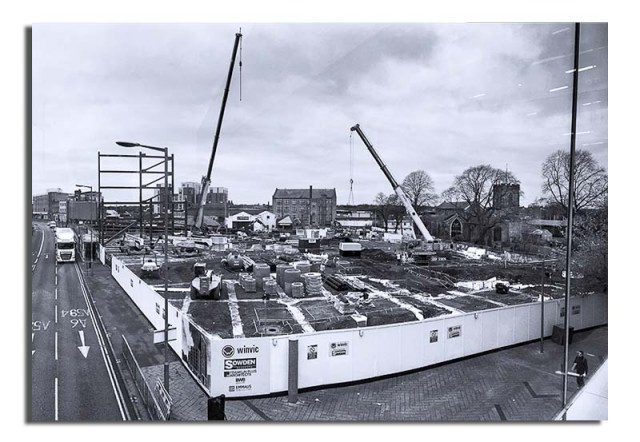
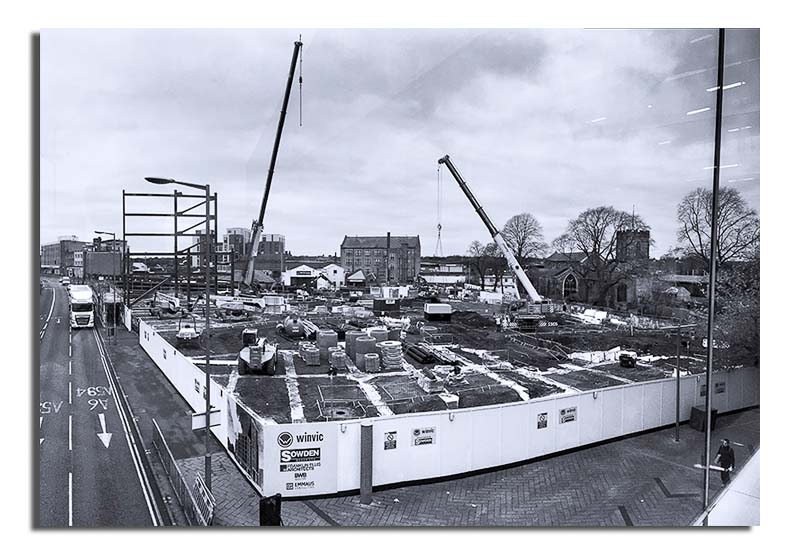
One final thought. The photograph is of a new building being built in Leicester. Now if I was an ardent Leave person I would say that this is clear evidence of the British economy’s strength because if the developers feared the worst then they wouldn’t go ahead with the building. However, the site of the new building is also a symbol of the complex relationship of our very long term interaction with the European mainland. During the Roman period a large villa stood on the site whilst during the Anglo Norman period it was the centre of the county/shire administration of Leicestershire. Leicester itself was a centre of proto protestant rebellion during the Lollards/Wycliffe heresy. It seems that Brexit is just the latest in along line of love/hate interactions between England and the major power on the continent of Europe. Continuity and change?























 Simon's Blog