
One of the problems that any photographer faces when trying to capture images in the Harry Potter Studio Tour is light or the lack of it. Fortunately, we live in a world where digital cameras provide opportunities that were not there when the films were made as they were recorded on, well, film. To reinforce this there is a huge still from the production in the Backlot Cafe where Michael Gambon is being filmed in the great hall delivering a speech from the podium. The image however shows the production crew who were watching as he delivered his lines including an Arri movie camera with a 1000 foot reel of film. The image was probably captured c2004/5 when digital was only really starting to enter major movie production so film, which is unlikely to have had an ISO or no more than 200, was the medium they recorded the images on. Hence massive lighting rigs etc. a lot of light was required to ensure the image was captured just the way that the DP wanted.
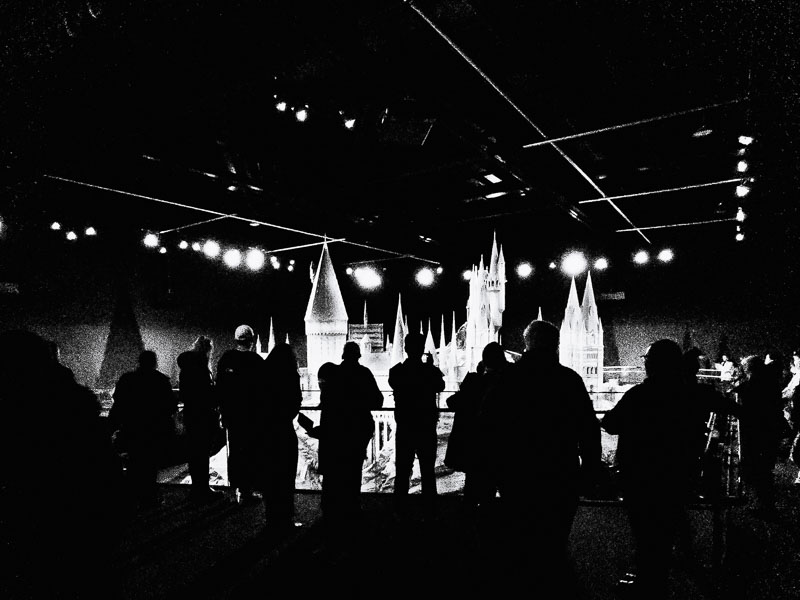
The reason I bring this up is that I used my iPhone 13 to capture a number of images in very very poor lighting conditions and came away with very different results. The first image of Hogwarts was taken using the Apple Pano function and relying on the computational power of the phone to correct any problems and it really delivered the goods. Now of course if you pixel peep you will soon notice that there are many problems with the image but, given it was captured in VERY poor lighting it is remarkable. (I also find pixel peeping to be a pointless exercise when the image is the real goal but the fidelity of each pixel – but that is just me you may disagree and I accept that.)
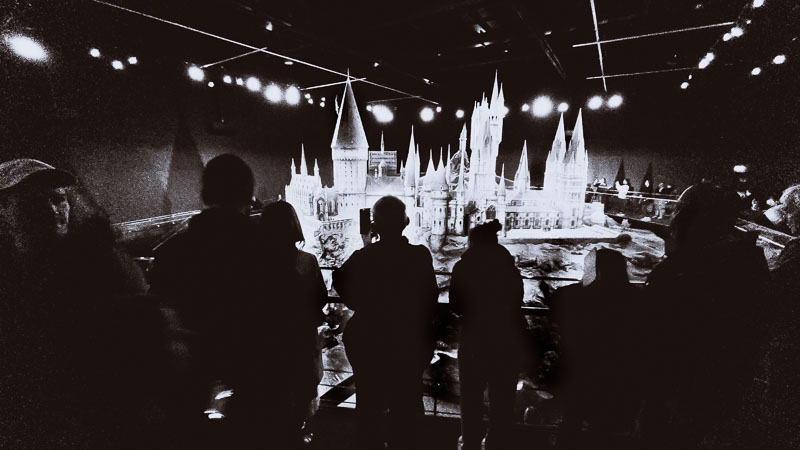
Just how remarkable the image processing was can be seen from the next image. This was captured with the ultrawide lens on the phone but instead of using the Apple App I used the Adobe Lightroom camera which, I believe, by passes the computational software of the Apple Camera app and gives you the raw data for you to use as you see fit. I used this for esthetic reasons and I am really happy with the results but it does underline just how powerful computational photography has become in the modern smartphone.

Now I have nothing against computational image making. The above image from the Ministry of Magic set was created by Adobe’s AI in Lightroom from two image I captured with my R3 and I think it is an important thing to think about when discussing computational photography in general and the broader issues surrounding how AI should be used. I made the decision to use it for my own artistic reasons. It was no more than an extra tool I now have available to me in the same way that the image stabilizing system on the camera helps me capture sharpe hand held images in very low light conditions. The problem comes when we don’t know these tools are beings used or we just accept what they have given us. They are tools nothing more and we should be the ones that make the decisions as and when they are deployed.


 Simon's Blog